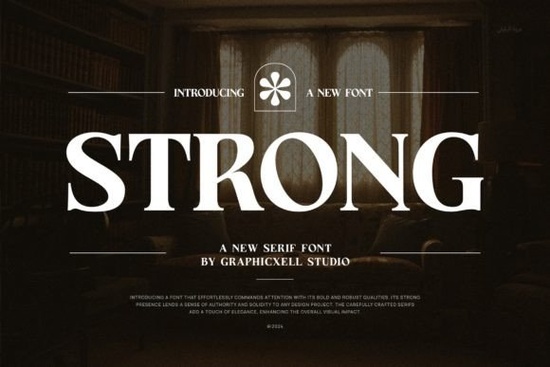
If you're looking for a serif font that feels both timeless and current something that works just as well on a wedding invitation as it does on a product label you’ll likely appreciate Strong Font. It’s not overly ornate, but it carries quiet confidence: clean lines, balanced proportions, and subtle contrast between thick and thin strokes. Designed with readability in mind, it holds up well at small sizes (think business cards or packaging text) and makes an impression at larger ones (like social media banners or wall art). It’s the kind of typeface you reach for when you want your message to feel intentional not flashy, just clear and considered.
When does Strong Font fit best?
This isn’t a one-trick font. Its versatility comes from thoughtful design choices: generous x-height, open counters, and even spacing. That’s why designers and small business owners regularly use it across different kinds of projects:
- Branding & logos especially for studios, boutiques, or lifestyle brands aiming for refined, approachable authority
- Wedding stationery from save-the-dates to menus, it pairs beautifully with soft watercolor backgrounds or minimalist layouts
- Social media graphics works reliably on Instagram carousels, Pinterest pins, or Facebook cover images without losing legibility
- Product packaging & labels whether you’re selling candles, tea, or handmade soap, it adds polish without feeling corporate
- Photography overlays & watermarks its clarity means text stays readable even over textured or busy imagery
You’ll also find it useful for print-on-demand sellers who need fonts that translate well across mugs, tote bags, and greeting cards. Because it’s PUA encoded, accessing alternate glyphs, ligatures, and stylistic sets is straightforward no complex font managers needed. Just install it, open your design app (like Canva, Adobe Illustrator, or Affinity Designer), and start typing. Most ligatures activate automatically if your software supports OpenType features.
How does it compare to other serif fonts on Creative Fabrica?
It sits comfortably between classic elegance and modern simplicity. If you’ve used Medvilea Editorial Font, you’ll notice Strong Font has less contrast and a more relaxed rhythm making it friendlier for longer blocks of text. Compared to Sharp History Font, which leans into vintage newspaper charm, Strong Font feels more neutral and adaptable across industries. It doesn’t shout “antique” or “luxury” it simply reads well, every time.
That neutrality is actually a strength. Many serif fonts either lean too traditional (hard to pair with bold sans-serifs) or too experimental (hard to read at a glance). Strong Font avoids both traps. It’s a reliable foundation not something you’ll tire of after three projects.
What about technical details?
Strong Font includes uppercase and lowercase letters, numerals, punctuation, multilingual support (including Latin Extended-A), and full OpenType features like standard ligatures, discretionary ligatures, and stylistic alternates. All characters are carefully hinted for crisp rendering on screen and in print. You get OTF, TTF, and WOFF files so whether you're designing in desktop apps or web-based tools, you’re covered.
It’s compatible with major platforms: Windows, macOS, Linux, and most web design tools. And because it’s licensed for commercial use (including POD, digital templates, and client work), you won’t hit licensing roadblocks mid-project.
Where else can you see similar styles?
If you enjoy Strong Font’s balance of structure and warmth, you might also like Medvilea Editorial Font for editorial layouts or Sharp History Font when you want a touch of typographic storytelling. Each serves a slightly different purpose but all share attention to spacing, rhythm, and real-world usability.
One practical tip: try pairing Strong Font with a clean, low-contrast sans-serif (like Montserrat Light or Inter) for headings + body copy combinations. The contrast feels intentional, not jarring and it’s a pairing that scales well across digital and print formats.
Before you download:
- Check your software supports OpenType features if you plan to use ligatures
- Test it at actual usage sizes especially for packaging or small-format prints
- Preview how it looks alongside your brand colors; serifs can shift perceived tone depending on background contrast
- Remember to install both OTF and TTF versions if you switch between apps some prefer one format over the other
- Save a style guide snippet showing your preferred pairing, weight, and leading for future consistency
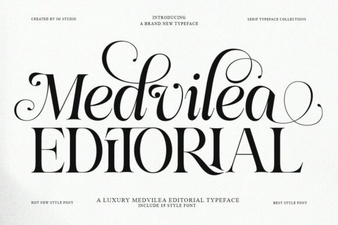 Medvilea Editorial Font for Creative Typography Design
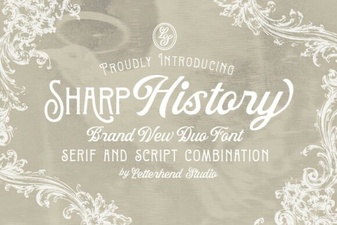 Sharp History: Design Tips & Creative Uses for a Classic Font
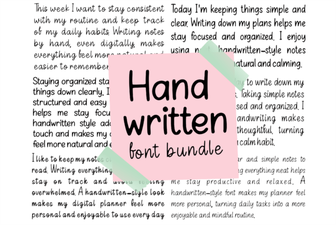 Enhance Your Designs with Our Handwritten Font Bundle
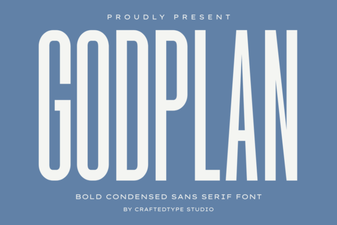 Godplan Font: Styles for Faith-Based Designs
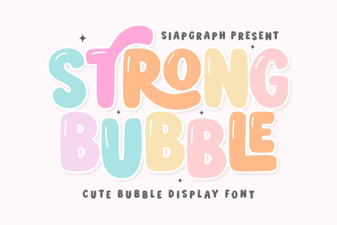 Bold Bubble Fonts for Creative Projects and Designs
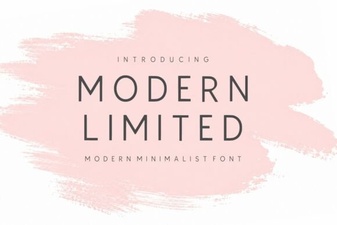 Modern Limited Font: Typography for Minimalist Projects